
On Existence And The Plight And Joy Thereof
There is, identifiably, something wrong. In Before Sunrise, Jesse, one of the two protagonists, the man of the couple the entire trilogy centers around, says that there is something akin to an intrinsic human tendency to remain disappointed with circumstance, to never really find any sort of joy around. This is, of course, a gross overgeneralisation, but he is touching on something many people have before, something that extends beyond mere dissatisfaction and towards the ultimate horror of existence: death itself and the absurd that arises out of the conflict between consciousness and the horror of our inability to comprehend nonexistence.
We will all die eventually, and there is nothing wrong with that inherently considering that all good stories require endings, but the issue lies in the fact that the fear of death is absolutely debilitating. It is that for which the mind has absolutely no frame of reference, that which was *before* you were born, a complete void of voids. We are here now, existent and around and free to enjoy being, but many of the things we do act as distractions. Pontifications serve to alleviate this burden, however, and as such we come to the birth of philosophy as we know it.
Philosophy has always been something I've been very interested in although I've only started properly reading very recently. It is some measure by which these things begin to feel somewhat tangible and approachable, that by which we can actually approach any of it. As such, I've been writing continuously about it for a long time, and have many thoughts which will be elaborated upon here.
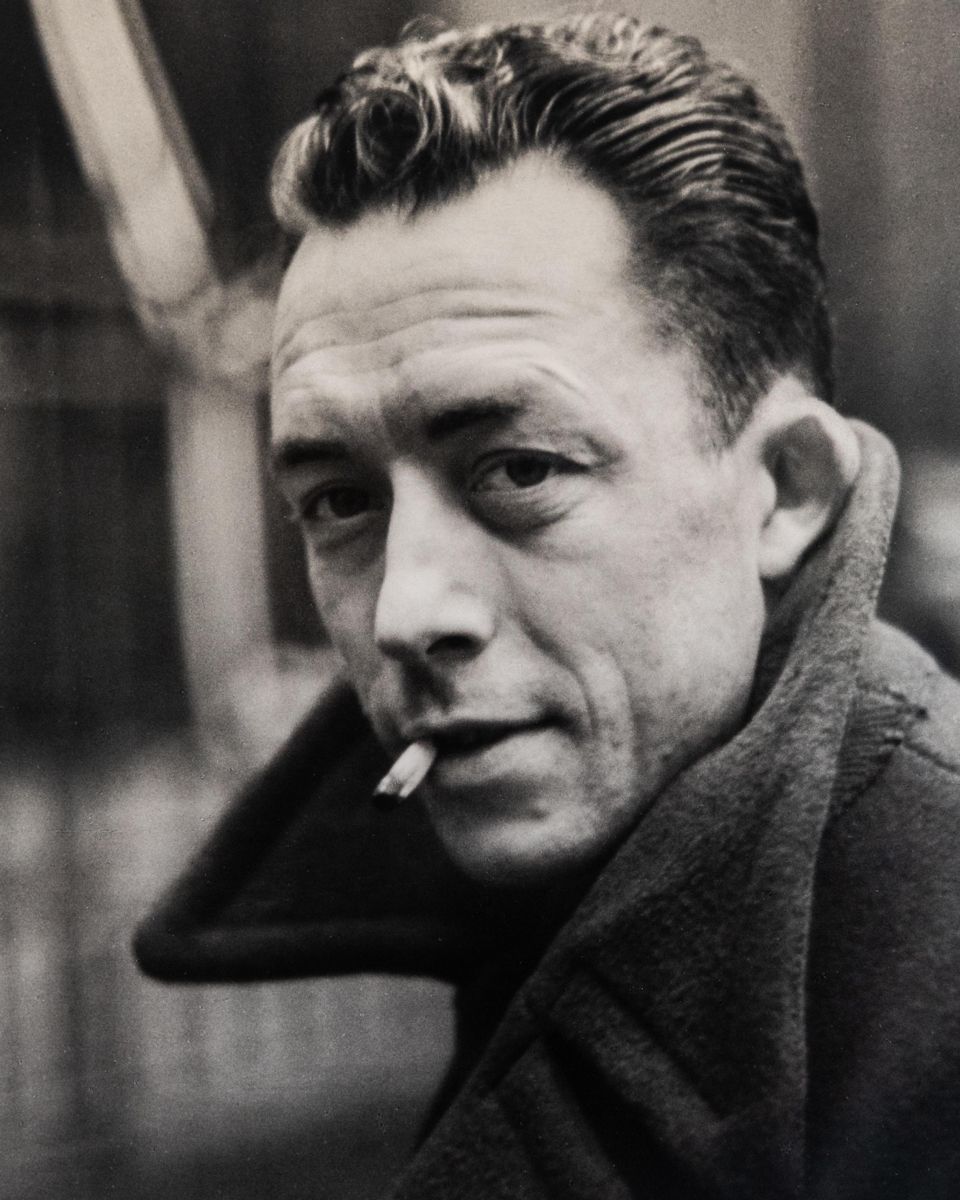
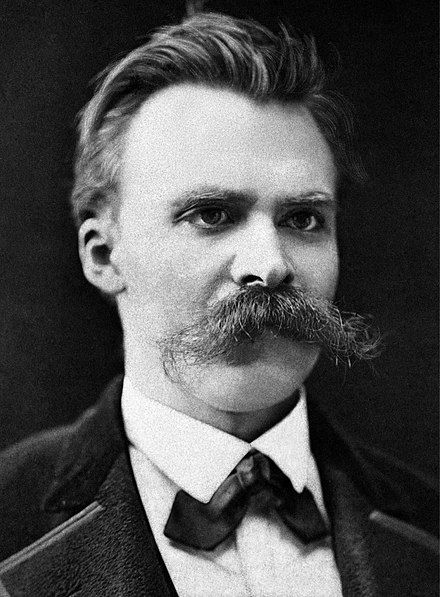
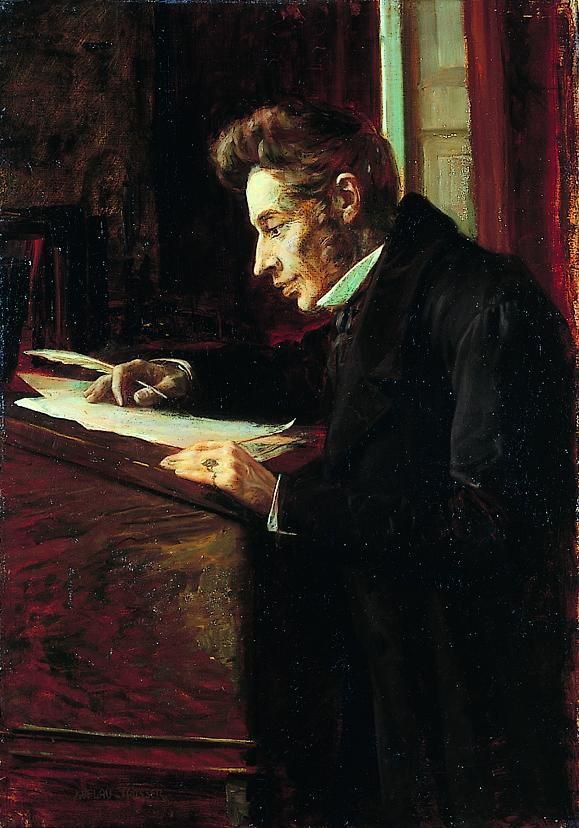
My philosophical outlooks have been primarily affected by Kierkegaard, Nietzsche and Camus, all of which present admittedly very different views of what might be considered the central question of life: purpose, or rather, as Camus puts it, suicide, that which is keeping us on this earth. I suppose on a great level I do agree with Camus' presumption that the only thing that is worth living for is that which is stopping you from committing suicide at any given moment, but it is a rather grim outlook. I've been influenced by Foucault primarily in regards of my views on institutions and he forms a great bedrock of my political convictions (September, dear friend, if you're reading this, I am eternally grateful), and I suppose on a greater level I do adhere to a lot of the ideas of the post-structuralist movement but I have not thoroughly read up on all of them quite yet, Foucault just being the one I'm most familiar with by far, with a little bit of Barthes thrown in too (who has fantastic ideas on aesthetics first and foremost).
I believe in God, but that the only thing that could be referred to as God, as a divinity, as something greater than, is that which is most certain, which is the very truth of existence itself that one can find as derivation of the Cogito, something that, admittedly, I think Descartes missed, interpreting this ultimate certainty he came upon through a lens that was very of his time, but nevertheless is something that we can take a different look at. It is not certain that there is an "I" at play when one speaks of this; after all, what is "I"? Foucault would make the argument that "I" is not fixed but can refer to a thousand differnet things at any given moment depending on context, and I would likely agree with such an estimation. It is not certain that that object—that which he refers to as a thinking thing, but I would argue is an overallexperiencing thing more so, as the separation between mind and sense is somewhat arbitrary and neither is more trustworthy than the other in an absolute epistemological sense—represents an "I" but rather, what is certain, is that it is experiencing, because it is fundamentally impossible to deny it's existence courtesy of the inherent contradiction.. for there to be a statement, there must be someone to make the statement, so therefore the statement "nothing exists" is a contradiciton by nature.
Alas, it is this which lies at the core of reality and is more certain than anything else. All else is uncertain, and furthermore, all truth is subjective because it is impossible to posit statements exterior to the subject. This affair is absurd, and the absurdity has very few ways out besides acceptance. The Nietzschean would argue for the seeking of the overman, which is a noble cause, but the important thing is that said overman is not itself the point, but rather the search is the point, the forever self-improvement. To arrive at any sort of meaning—nay, any concept of truth—one must take a leap of faith a la Kierkegaard but said leap of faith is not but merely the one towards the Christian God that Kierkegaard posits, rather, it is the jump towards the rejection of rejection itself, towards the idea that the arbitration of purpose is worthy because it is arbitrary, and that to exist is to be holy. This is a short look into a lot of the things I will write about here and there is a very good chance that many of my views will shift as I read more, but time will tell.
As an aside, to anyone wanting to read Descartes, I highly recommend Jeffrey Kaplan's lecture series on Meditations On First Philosophy which proved invaluable whilst I was reading it, as well as the Stanford Encyclopedia Of Philosophy which often proves to be a fantastic reading source.