The Hunger
In Discipline And Punish, Michel Foucault spends a long amount of time expanding on the concept of “discipline.” It is one of the most revolutionary concepts in contemporary philosophy for how immediately intuitive it is and yet how it fundamentally recolors the conventional perspective on how people’s conceptions of the world develop.
In short, Foucault posits that with the industrial age, the old understanding of penality was changed as monarchy was out and republics were in, ensuring the need for a new distribution of power and a new method of control, one that was invisible to the common eye and functioned in bounds incomprehensible to the eye of the sovereign that previously dictated all. “Discipline” is the means by which people are mutated by the forces exhibiting power upon them. It is most obvious in education as that serves not only to teach as it claims but further still to mold the student into a perfect image, and the same metrics are applied in many areas of life, in the prisons Foucault dedicated his book to studying, to hospitals and many other areas of life where ideas are transmitted. This serves a simple purpose: objectification. Objectification is the end goal of discipline, wherein the individual is no longer capable of resisting the force of discipline, is molded perfectly into the image of what is to us 50 years after Discipline And Punish the neoliberal man; ruthlessly ambitious and projecting all value within the material performance; incapable of processing their lived relationships outside the bounds of social norms; unable to explore the world for its own sake, instead being guided by the forces of power-knowledge that inflict themselves on his immanent, finite soul and turn him into the product of the age.
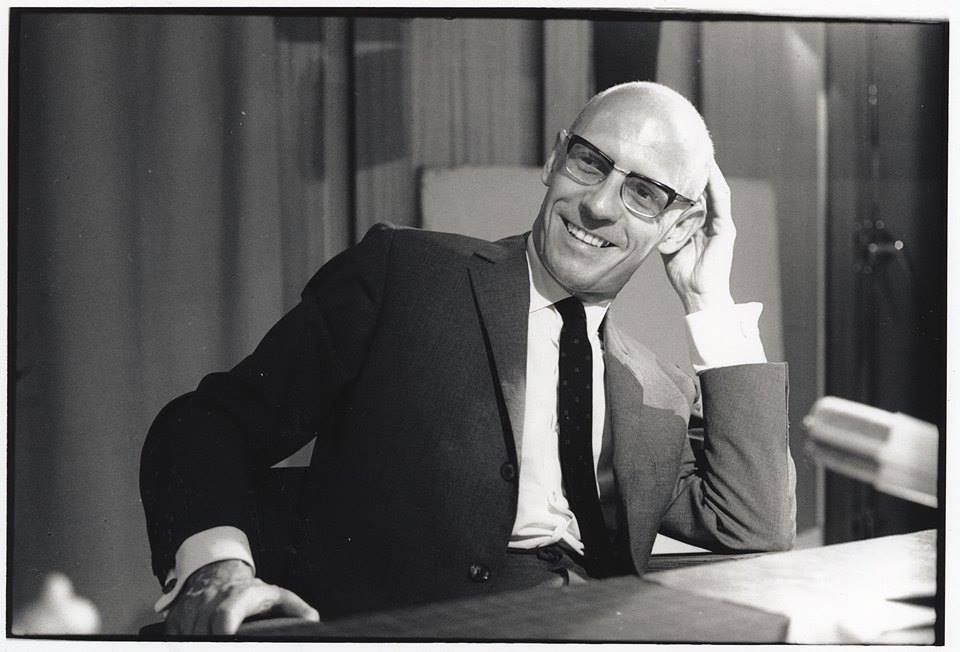
There is a side-effect to discipline that I want to explore. The processes of objectification are by nature fallible and do not manage to always produce the desired outcome. Of course, this is because discipline is not controlled and is not top-down, it is continuously re-enforced by those who’ve had it enforced upon them. This inevitably leads to situations where the process simply fails, where people are too “lucid” to succumb to it and its expectations, where the desire for a different, better existence supercedes all.
This breeds a phenomenon I like to refer to as The Hunger. The Hunger is a state of being that the disaffected find themselves in line with, one wherein the general malaise of discipline does not infiltrate but instead breeds in reaction to itself a sort of self-justifying desire of desire itself, the want to want to self-actualize, something born of the soul’s deepest parts as opposed to any social convention.
The Hunger is an immensely painful thing to experience. It is the thrashing around in the great drowning of life that keeps going on and on, the rejection of your negation and inability to overpower it resulting in a compulsive drive that is at once your raison d’etre and raison de tuer toi-meme, a baptism that never ends that makes it seem as though you are dying the sins of all around you. It is perhaps the defining feature of my life and has been prevalent especially over the last few years with the amount of pain I’ve endured attempting to find myself in a world that is fundamentally hostile to my existence and refuses to see me as worthy of being to begin with.
The Hunger is a feeling that is articulated incredibly well in art. It is silenced in the tunnel in The Perks Of Being A Wallflower as it is finally satiated. It is most expressed in music however, occasionally in Bowie as in Heroes and Teenage Wildlife, but most fervently in the music of Bruce Springsteen who I will be focusing on, specifically the album Darkness On The Edge Of Town which deals with it in the most variety.
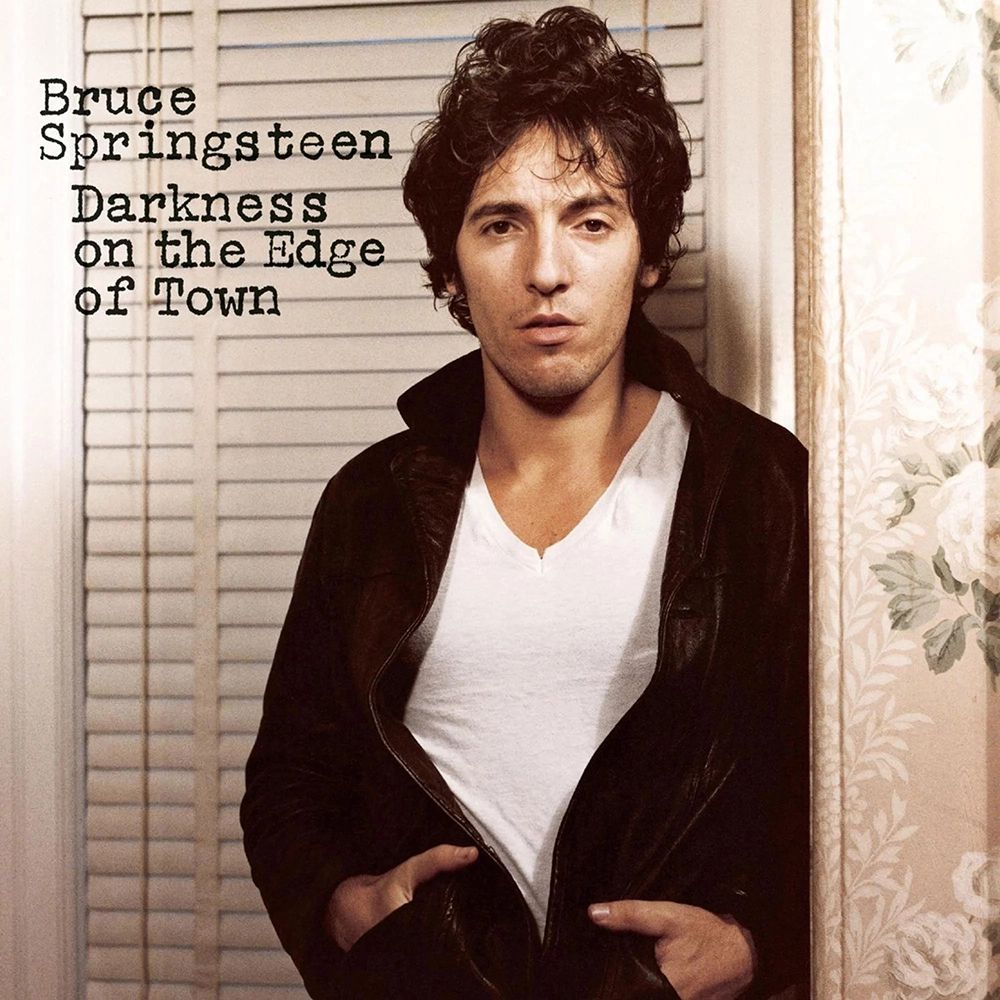
The album is named after a multi-faceted concept. The darkness exists both literally, as in the parts of town where the delinquents, the rock and rollers, the addicts, the racers, the street philosophers, the queers and their ilk gather because nowhere else will take them, finding themselves defined rigorously in opposition to the rest of society. It also exists in their hearts as the birthplace of The Hunger, it is the void that objectification creates in their souls that cannot be filled because discipline is the only thing that can fill it but it never quite fits right.
In the lyrics of Darkness On The Edge Of Town is reflected the proletarian malaise of dreams that refuse to come true, that the world at large, even if you don’t agree, sees that it is a sin to be glad you’re alive and the pain that comes as a result of that post-euphoric impossibility of achievement. The album opens with the song Badlands which is a perfect case study:
“Talk about a dream, try to make it real,
You wake up in the night with a dream so real,
You spend your whole life waiting for a moment that just don’t come,
Well, don’t waste your time waiting..”
The Hunger shows itself in the inability to simply accept the condition, instead maintaining the dream of bigger and better things despite the perceived impossibility, perhaps because it is impossible. In the work of Kierkegaard, there exists the notion of the leap of faith, that it is impossible to make a definitive rational claim about the existence of God and that the believer ought to throw themselves into their belief without consideration. The principle here is rather similar.
The first song on Darkness On The Edge Of Town is a remarkable display of everything that not only makes Springsteen relevant but further more the ultimate expression of this devouring longing, the thing that makes men hurt themselves and everyone around them.
The Hunger manifests itself in men in a very particular way to add: it is a sort of drive towards ritualistic self-destruction to validate oneself’s sense of manhood and one’s wisdom further still. In Jack Kerouac’s journals, he recounts a story wherein Allen Ginsberg once asked to be punched in the face as hard as one can be punched. He refused and said:
“I told him I did have an unconscious desire to hit him but he would be glad later on that I did not. It seems to me I did the most truthful thing there but at the moment the experience seems so insane, unnecessary, fool- ish, and pallidly Demonic that I can't think of what to say. I'm through with all that foolishness, and have been for a long time.. These Ginsbergs, just coming of daemonic agee assume that no one else has seen their visions of cataclysmic emotion 90% false and 10% childish, and try to foist them on others..”

There is a specific intersection of queerness, neurodivergence, a love of art, unorthodox spirituality, the politically radical, the lifestyles of those who sit in that darkness, that I find to be consistent through this sort of analysis. It is the truest of experiences that I myself have undergone. The Hunger is the natural byproduct of an existence that refuses to validate and forces the validation to justify itself by itself to itself; a great sort enveloping pit of dimensions of inaccessible catharsis merely glanced at, the great glory of the infinite goodness and evil of being reflected back merely in a few minutes every few weeks again and again, the sort of thing you grasp at as hard as you can because the dream of it is what you live for. It is that great impossible beyond that every Springsteenian hero, Homeric and bold in folly, keeps forever searching for, to prove it all night, to run as far as you can, to make it out of the badlands, to case the promised land, thunder road where your great engines of overpowering hope shall blind the cynical and the heartless and rejuvenate those who have the same spirit of wanting greater things..
Of course, there is no enlightenment to be found in being punched in the face. Neither is there innately in the sort of Ginsbergian self-destruction that claims that orgies are holy, although that is an expression of it. The holiness exists in the fact of being in itself, the great antidote to The Hunger, the kinder side of it that must be utilized in sparseness lest the Hungry go mad and start eating their own limbs. It is the remembrance that ipso facto, there is goodness in being. That was Ginsberg’s folly, because how on earth would his friend smashing the daylights out of him bring him out of whatever stupor he thought himself trapped in? How could that defy his objectification?
The Hunger creates an expectation to fulfill a role that is antithetical to the objectified in most senses but its defiance is as much admirable as it is bratty, because for however much you may claim to be in favor of the divine, you have to come back to earth every time. It’s why there’s a Darkness On The Edge Of Town after Born To Run. You can run, but you have to stop eventually.
It is impossible to fully defy The Hunger, in truth. Once it seeps into someone’s being, it can never really leave in the truest sense. But its face of beauty is like that of Persephone come down to plant her lips on yours, a godliness taking over your entire core so much that it makes all the rest of being outside of the chorus seem a bit moot. That is not how it is. The pain of it is the pain of making due, in Springsteen words,“is a dream a lie if it don’t come true, or is it something worse?” but all the same, the pain remains because dreams refuse to die.
I do not have the answers. Much as all these words seem to reflect an understanding, it is weak in the face of the great call of something you can never put words to, that ineffable bleeding of hearts and souls that becomes a pleasure all onto itself. It is a perpetual fight against oneself and as time has gone on, I’ve gotten better at reigning myself in with that but The Hunger invites an amount of self-delusion because the world is simply not built for those imbeciles of great mind and of a Dasein that is humiliated again and again but contains within itself eternity. All that I can say is that one has to hold on to the half that The Hunger has right: that great goodness, that “it ain’t no sin to be glad you’re alive” and whatever that may entail in the great enemy of this inexplicability, practical terms.