Leaps Of Faith Towards The God That We Are
I'm developing an intense fascination with a 19th century philosopher you have probably heard of who goes by the name of Søren Kierkegaard.
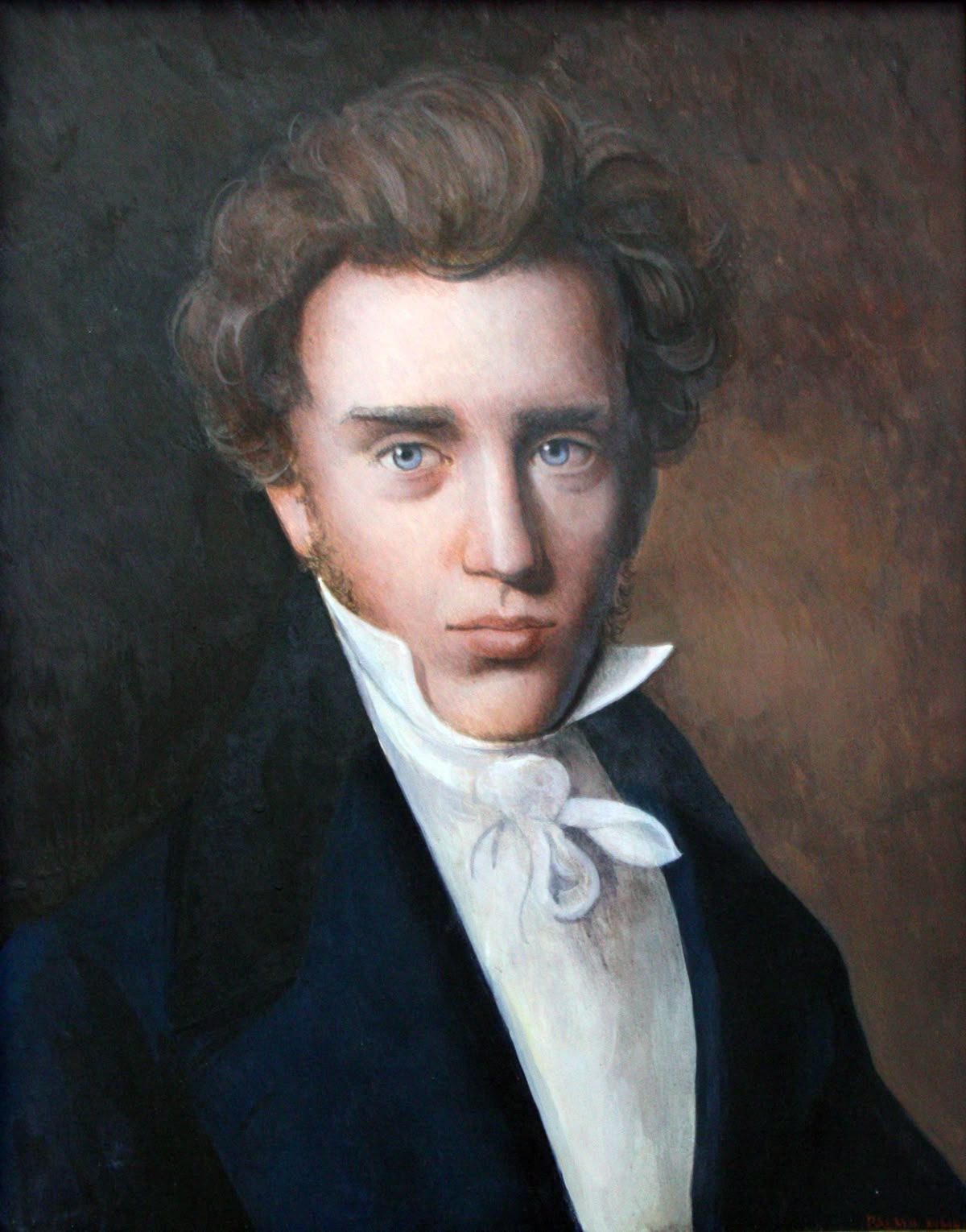
Endlessly interesting intellectually and possessing a legitimately unmatched literary prowess (seriously.. this man's prose was one of a kind), Kierkegaard was one of the precursors of modern existentialist philosophy and his insight on the dreariness and difficulty of reality and the need of the individual man to find purpose, in his case, through God, has been tremendously interesting to me for a myriad of reasons.
The main reason is the fact that he posits a much more honest argument for his own belief in God, one that does not even feign the sort of rationalist escape that the likes of Kant and Descartes attempted to come to as a means of justifying the existence of their concept of God rationally. Kierkegaard's faith is illogical and irrational to the core, there are no ontological or cosmological deitic proofs to be found, instead, he posits that such a thing is entirely unknowable in rational terms and pure rationality cannot guide one to God. As such, all people must make a leap of faith towards the divine as their one and only salvation from the aesthetic miserable life that most of us are naturally born into. It is a rather macabre view and one that reduces our world to a grim existence; the aesthetic life, that which we are all born into, is one of distraction from boredom and the void at the core of our hearts; the ethical life of responsibility and God is one that can crush oneself as Kierkegaard rather famously demonstrates in his view of the story of Abraham being ordered to sacrifice his own son by God.
I am not here to affirm the sort of moral negation and almost fanatical bent that such a notion would imply, nor am I going to draw such a strict binary as Kierkegaard did. I am going to argue that the aesthetic life and the ethical one are one and the same, that either is or and or is either, that samsara is nirvana.
The sacred as it exists in human culture and history is an experience that is inherently divided from the profane. The sacred is cut off and differentiated and made separate, as though the experience of the social taboo is made base on an existential level beyond merely the reproach of your fellow man. Sex, drugs, alcohol, any and all sorts of debauchery, they are viewed in contrast to the experience of the holy man, the pious and abstinent and bachelor. This is an arbitrary division that institutions across history have concocted as a means of control—such is the function of all churches and organised religion on a mass scale, and in a more abstract sense is also the function of all authority—and is one by which we have adopted a narrow cultural understanding. In the last century there came about attempts to break away from such a narrow concept of piety through the work of people like Allen Ginsberg who posited a homosexual depraved holiness in his being, that the world is holy in all aspects including that which courses through our beings in our points of utmost pleasure.
Kierkegaard wrote a book named "The Present Age" wherein he presents an absolutely scathing criticism of modern life and the absolute death of the heart that it inflicts on most people. To quote a passage:
Nowadays not even a suicide kills himself in desperation. Before taking the step he deliberates so long and so carefully that he literally chokes with thought. It is even questionable whether he ought to be called a suicide, since it is really thought which takes his life. He does not die with deliberation but from deliberation.
I would like to posit a sort of different escape from that hell of deliberation or reflection as he refers to it that gives the illusion of the destruction of the order of things and such an escape can be found in a spiritual outlook that views the mere fact of experience as being the root of holiness. The divide that has always been posited between the lowly existence on earth we possess and the fictitious beyond of organised faith is one that has to be absolutely abolished for the spiritual wellbeing of the individual, and for that I would like to quote a Hermann Hesse book, Siddhartha.
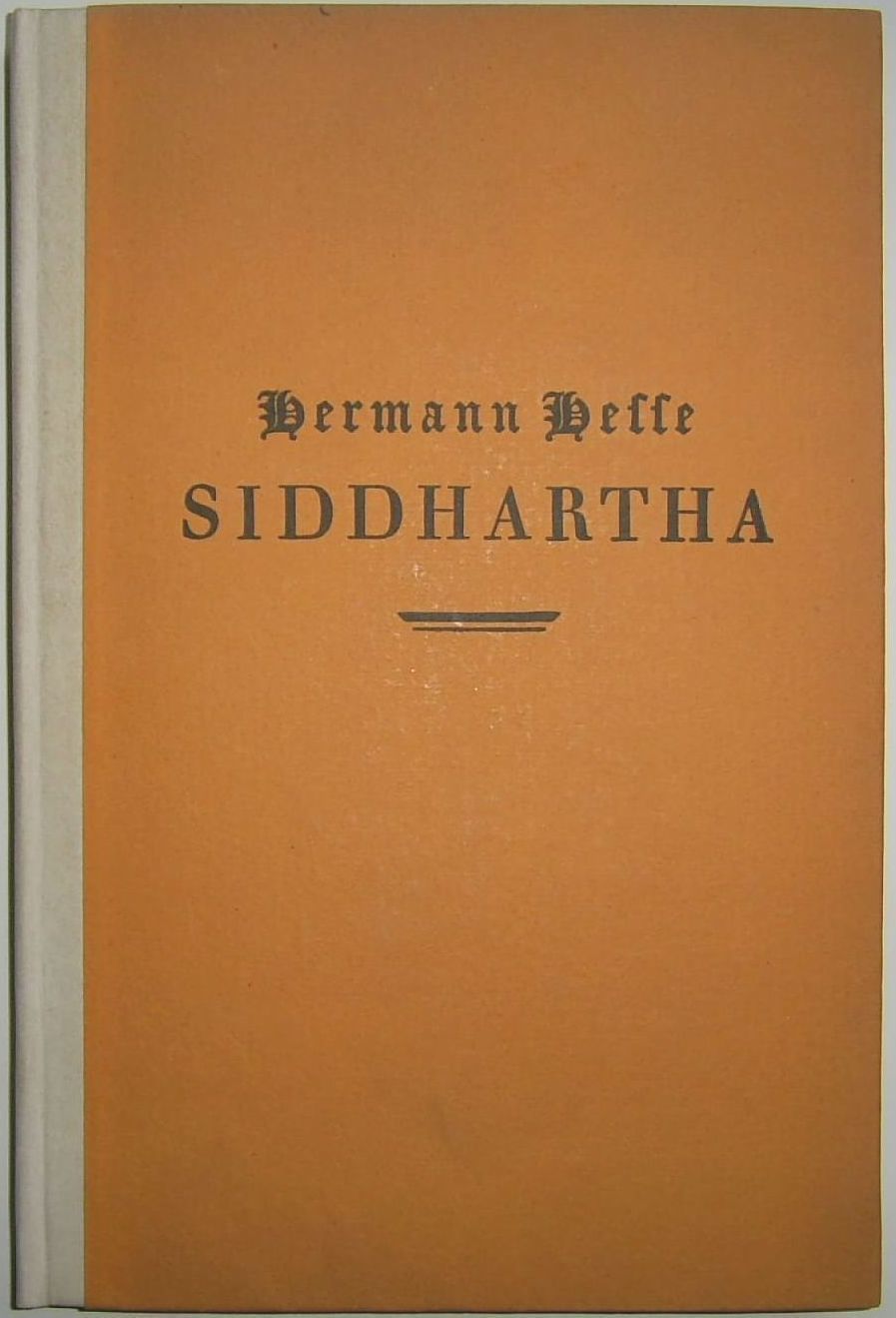
My favourite book of all time, for the record.
There is immense substance within this book towards how it treats the problem of existence through the lens of both a Hindu and Buddhist outlook. References to Om, the fleeing of the self essential to Buddhist doctrine and many other things come across time and again in here, but there is a part towards the very end of the book, wherein the great Siddhartha meets his friend Govinda once more, having achieved enlightenment, and he tells him:
“When someone is searching,” said Siddhartha, “then it might easily happen that the only thing his eyes still see is that what he searches for, that he is unable to find anything, to let anything enter his mind, because he always thinks of nothing but the object of his search, because he has a goal, because he is obsessed by the goal. Searching means: having a goal. But finding means: being free, being open, having no goal. You, oh venerable one, are perhaps indeed a searcher, because, striving for your goal, there are many things you don’t see, which are directly in front of your eyes.
What Govinda fails to see that is right in front of him is the fact that, as I said prior, samsara is nirvana. The experience of the cycle of existence, though perhaps not illustrated as thoroughly through the lens of strict Buddhist reincarnation, is one we all go through, we transform an infinite amount of times per every infinitesimal moment. To search, as the traditional religious view would impose on us, is futile because searching is a perpetual dead-end for we are terrible navigators of the realm of our hearts and souls, the smartest people in the world often becoming fools to the power of their emotive aspects. There is tremendous beauty in that, in the indescribable experience, in the qualia of cold and heat and red and blue and sad and happy, in the fact words are very rarely ever enough for such things, in the fact we march on and on incapable of ever transcending which is why we are transcendent, for transcendence implies that there is something beyond, and everything is beyond, for there is everything when there just as well could've been nothing.
The Truth has marched in in the light of the God that we are. All that remains is to accept it and take it in, to be as one with the world that we inhabit and to live and love as creatures that have taken the leap of faith towards loving one another and everything around us further still. Kierkegaard was a miserable man who wrote extensively about the depths of his own suffering, and there is suffering to be had but suffering is experience and all experience is holy. We need not be bound by the limits of our imaginations, as he was, that only the conventional God of Abraham may save us, for we are God and he is us, the universe inspecting itself, the ultimate coincidence that our subjective selves ought to take in for the grandeur that it so possesses to ourselves, such is the leap of faith. It matters not how things go or where we find ourselves, it matters that we are still here and that we ever got the chance to live at all for regret and the malice of existence, the sort of cynical void-heartedness of our age ought to be annihilated completely. We need not a revolutionary age perhaps in the same sense that Kierkegaard referred to it in "The Present Age" but we most definitely do need a revolution of the heart and the spirit.
Far too many people in our contemporary landscape find themselves taken away with the depths of their own carnality in an aimless escape from the void. The only way out is to open our eyes to see that the void is entirely under our whims.