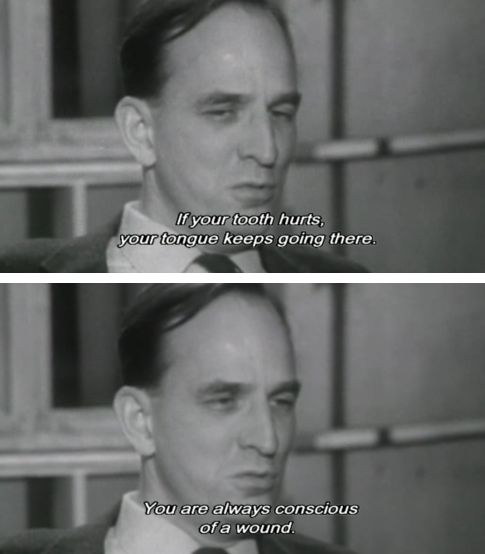
The Artist As Philosopher: Ingmar Bergman
There is a scene I think about often from the Ingmar Bergman movie, Autumn Sonata. In it, Eva, the daughter, sits in her deceased child's room upstairs while her mother, Charlotte, seeks her out wanting to go out for a walk. It's still the first part of the movie, before the tensions have completely exploded into the greatest of cinematic crescendoes, and Eva takes this moment as a time and an opportunity to attempt to connect with her mother as it relates to their shared grief, Eva over her son Erik and Charlotte over her friend Leonardo. Eva says:
"Wait, Mama. Just feel how nice it is in here. Erik drowned the day before his fourth birthday. But you know that. It was too much for Viktor. I grieved a lot, outwardly. Deep inside, I felt like he was still alive, that we were living close to each other. All I have to do is concentrate, and he's there. Sometimes, as I'm falling asleep I can feel him breathing on my face and touching me with his hand. He's living another life, but we can reach one another. There's no dividing line, no insurmountable wall. I wonder what reality looks like where my little boy is living. I know it can't be described. It's a world of liberated feelings. Do you know what I mean? To me, man is a tremendous creation, an inconceivable thought. In man, there is everything, from the highest to the lowest. Man is God's image, and in God there is everything. So human beings are created, but also the demons and the saints, the prophets and artists and iconoclasts. Everything exists side by side. It's like huge patterns changing all the time. Do you know what I mean? In the same way, there must also be countless realities. Not only the reality we perceive with our dull senses, but a tumult of realities arching above each other inside and outside. It's just fear and priggishness to believe in limits. There are no limits. Neither for thoughts nor for feelings. It's anxiety that sets limits, don't you think so? When you play the slow movement of the Hammerklavier sonata, you must feel like you're living in a world without limitations, in a movement you can never see through or explore."
Eva's metaphysics are fascinating. The existentialist undercurrent running through the entirety of this monologue and the rest of the film in the way it tackles the immense grief that Eva herself underwent at the hands of her mother's neglect showcases quite well not only Bergman's superhuman knack for screenwriting, not only the impeccable acting chops of Liv Ullman and Ingrid Bergman, but most relevantly of all, it showcases a view of the world that mixes beautifully with the pain that is being communicated that has been felt time and again by so many people on this earth. Eva personifies a sort of person in the world who I understand most, who I am, the sort who are incredibly smart and aware but never quite so aware as to outrun the wild boar that is their souls. It snarls and gnashes against constraints, crying out for release, never arriving at it. Liv Ullman was an expert at playing this sort of person; Marianne in Scenes From A Marriage is quite alike to Eva in a lot of regards, but Eva is sort of an opposite side of the coin to Marianne's wild side, for while she is prone to sexualization to the furthest level, Eva stands as a paragon of suffering, a sort of patron saint of lowly resignation, even if perhaps some details of the story don't perfectly fit this narrative (her old pregnancy comes to mind), it serves well to contrast the differences in Bergman's approach to writing across different movies.
It is almost impossible to put into words true to life the reaction that Eva had is. Childhood neglect is an experience that many people endure, forced to survive an environment that is not necessarily immediately hostile all the time but one that crushes the soul, Foucauldian discipline at play making it so it is not but merely Eva's body in that corner, the tears rolling down her cheeks, but her soul crying out just the same for salvation, the terror of love, the pain of being stuffed into a role that doesn't fit you. Charlotte is not a bad person and it is a grave misunderstanding to misattribute all these things as genuine faults of character of her in a way that makes her out to be malicious; she never knew what love was in her household either, was never quite capable, as she puts it, of living in her life, only ever in her art. Eva was capable of living in neither as a result, however.
I think there are many things to take away from this, both as it relates to Charlotte's attitude as well as Evas. The first part of the movie that builds up the suspense showcases very obviously that in many regards, Charlotte and Eva truly have missed eachother, as has Charlotte with Helena, who she put away for her inability to care for her in many similar ways as she couldn't with Eva, a sickness of the heart in both that simply manifested itself physically, wholly, crushingly, in the daughter. In this, Charlotte feels resentful for being forced to confront her sins, but in the latter part of the film, the role of the hurt party shifts and the entire dynamic alters quite rapidly, as Charlotte completely breaks under the weight of Eva's unending judgment and cruelty, Ullman's face twisting into this contorted hateful glare, the malice in it similar to the famous shot that she gives her in the first half as she's playing the piano.
I bring this all up to illustrate the fact that in Erik, not in his body but his soul, he Erik was, Eva somehow managed to find greater companionship in the world than she ever could in all human beings, in the same fashion that Charlotte only ever had pianos to accompany her. It speaks to how human nature often has a dissatisified aspect: the constant melancholy, the inability to reason ourselves out of our constraints, the anguish of the universe's complete indifference. It is well and truly a powerful thing.
The first time I ever watched Autumn Sonata, I wept continuously for most of the second half and quite a bit after it ended. It's a very affecting film in all regards, one that does not allow respite, one that makes it well apparent that there are many dimensions to the relationship between parent and child, mother and daughter, one that tackles femininity with immense grace, one that tackles the pain of not meeting expectation with immense empathy and brute force, one that sees it all. Even the odd allusion to queerness is handled with immense tact here. It is a masterclass in cinema. It is my favourite movie.
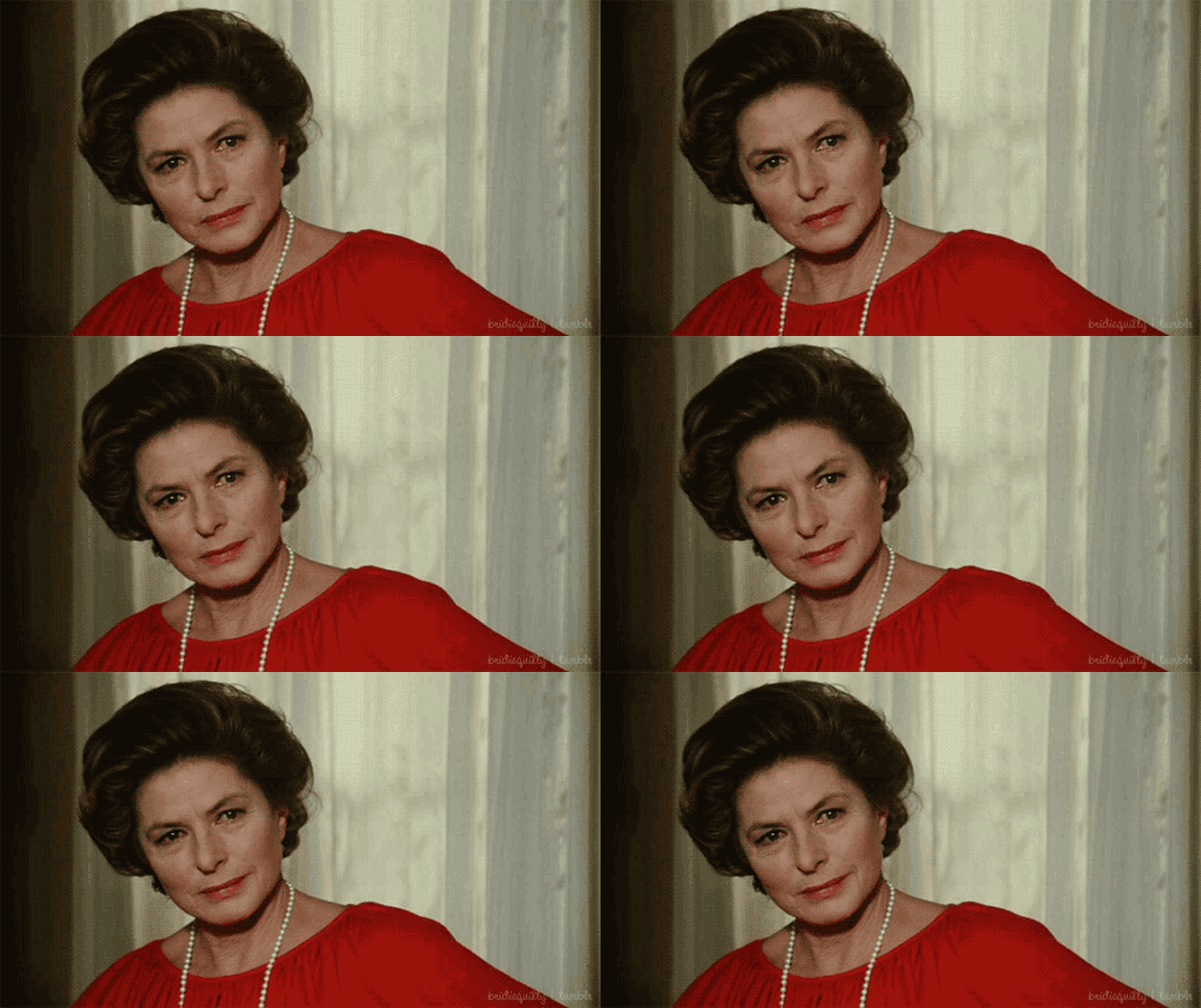
The eyes of Charlotte glisten with pride as she watches her daughter play Chopin, immersed in the laconic void that stands between them, in the warmth of nostalgic tenderness despite all its pains. She is not really paying attention to her Chopin playing at all, she is looking at the person her daughter has become, enraptured in her own longing, feeling but not showing, as she puts it. It is really an encapsulation of the philosophical undercurrent that the entire creative enterprise Ingmar Bergman created led up to. Worlds of non-communication, a Wittgenstenian incomprehension of the language game at play that puts Charlotte and Eva, Marianne and Johan, Tomas and Märta, all of them have to endure this lack, rolling around each other and unable to really comprehend the dimensions of one another, incredibly smart and learned people all around but rendered foolish in the wake of this world, losing themselves in the misery of their own vice, of their God, of their piano, unable to escape the fact that it is impossible to live in one's life. Undercurrents of existentialist philosophy show up all the time in Bergman's work underpinning this inability to communicate, from the Kierkegaardian leap that Eva takes towards her belief that Erik's spirit is still with her and her Nietzschean refusal to be taken down by her anxiety, to the aforementioned Wittgenstein showing in Scenes From A Marriage, to the earlier Bergman who wrestled with the God void and the metaphysical incomprehension that allows for these conflicts to begin with.
I've spent all this time looking at these films because I think it is important to highlight the fact that Ingmar Bergman was and remains one of the greatest creatives in all of human history. The man had an ability to tap into the deepest crevices of human conflict and expose our hypocrises, our lacks, our beauty in ways that no other director ever really could. He was a master in every sense and Autumn Sonata is my personal choice of his many gospels because it incapsulates the most interesting aspects of him, the way in which he understood our human relations and reflected them back at us. He was special. He was Ingmar Bergman. All his tales reflected this, creating, in that sort of Camus sense, a very consistent body of work and a philosophy that confirms what the man aforementioned says in the Myth Of Sisyphus, of the artist as philosopher.